
Introduction
In today’s rapidly evolving technological landscape, AI agents are becoming increasingly important tools for automation and decision-making. Let’s explore what they are and how they work.
What is an AI Agent?
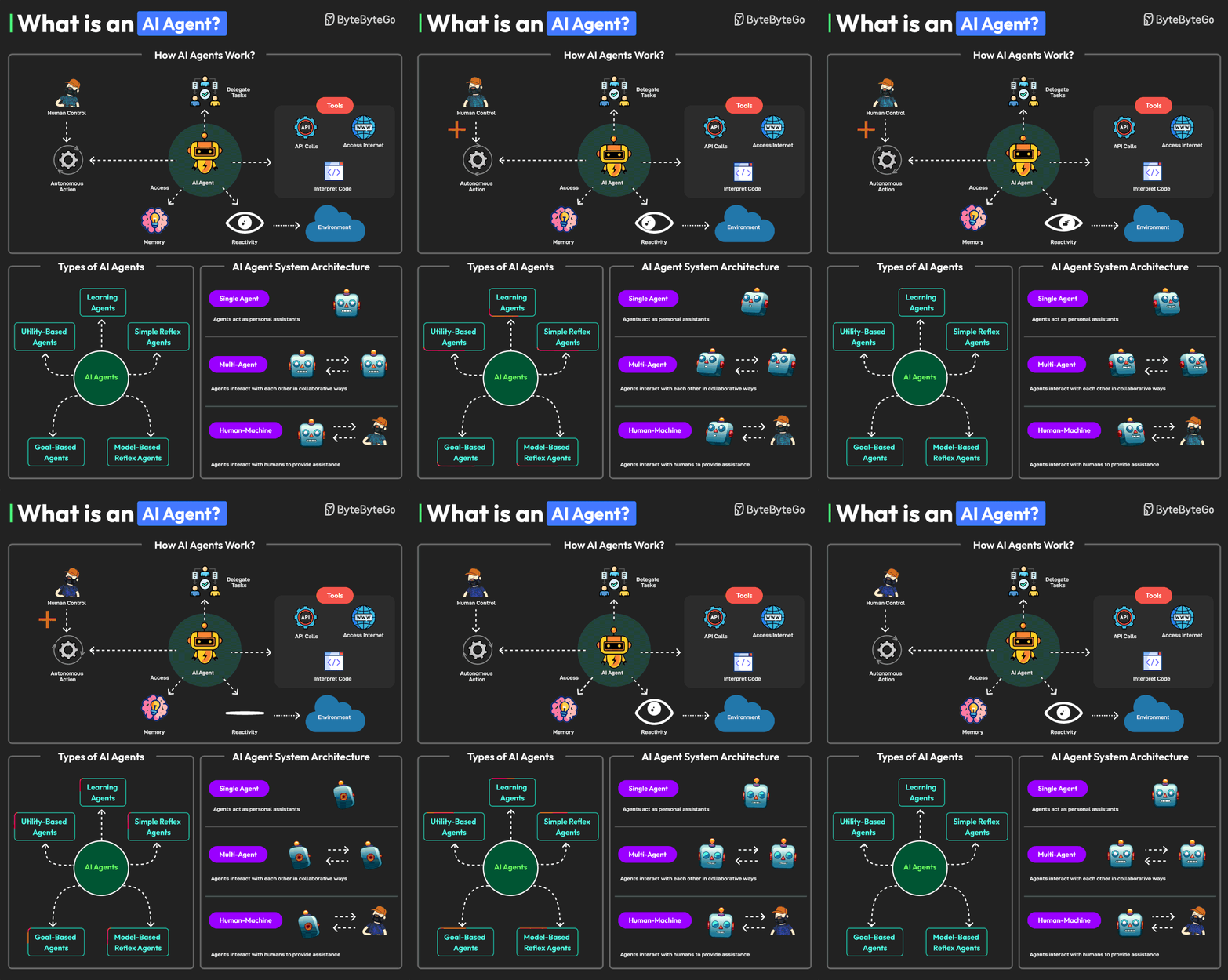
An AI agent is a software program that:
- Interacts with its environment
- Collects and processes data
- Makes decisions to achieve goals
- Takes autonomous actions
Think of it as a digital assistant that can perceive, think, and act on its own.
Key Characteristics
1. Autonomy
- Acts independently
- Requires minimal human supervision
- Can include human oversight when needed
2. Memory and Knowledge
- Stores information and preferences
- Personalizes interactions
- Leverages LLMs for advanced processing
3. Perception
- Gathers environmental data
- Interprets information
- Makes informed decisions
4. Tool Usage
- Accesses internet resources
- Uses code interpreters
- Integrates with APIs
5. Collaboration
- Works with other agents
- Interacts with humans
- Enhances team productivity
Types of AI Agents
- Learning Agents
- Adapt from experience
- Improve over time
- Simple Reflex Agents
- React to current input
- Follow basic rules
- Model-Based Reflex Agents
- Maintain internal state
- Consider past experiences
- Goal-Based Agents
- Work toward objectives
- Plan actions strategically
- Utility-Based Agents
- Optimize for best outcomes
- Balance multiple factors
System Architectures
Single Agent Systems
Perfect for personal assistance and focused tasks
Multi-Agent Systems
Enables complex problem-solving through collaboration
Human-Machine Teams
Combines human insight with AI capabilities
Now Let’s Get Interactive 💭
Have you used AI agents before? Share your experience:
- What tasks did you automate?
- Which type of agent did you use?
- What were the results?
I hope you liked it!
Comments powered by Disqus.